Alumni Spotlight: Mary Camaj (’24MA, Political Science)
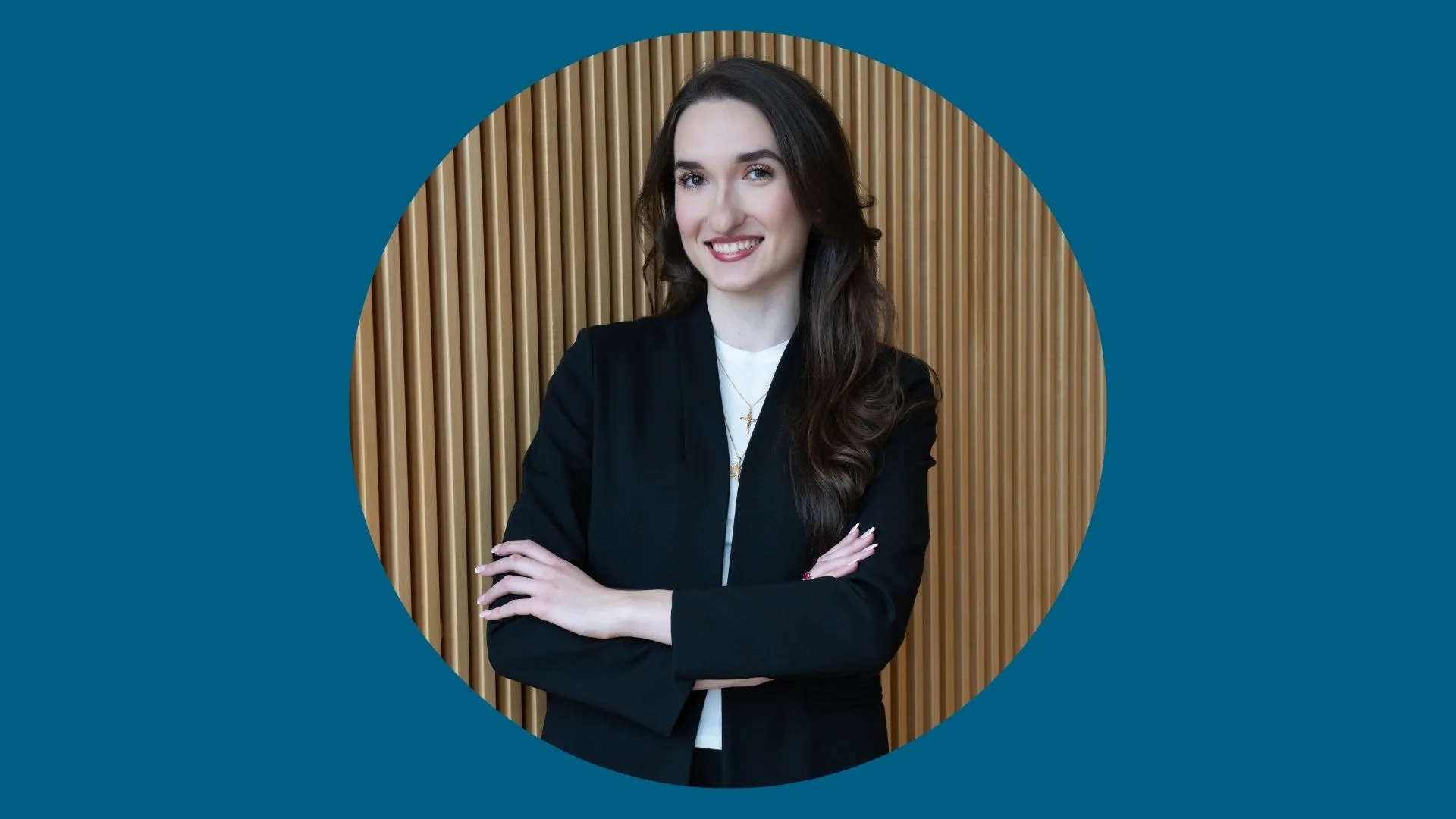
Mary Camaj is an Opportunity Programs Analyst at the Dormitory Authority of the State of New York (DASNY). Born and raised in New York as the daughter of Albanian immigrants, Mary utilized her time at Columbia to bridge the gap between academic research and public service. Today, she works to ensure equitable access to public contracts for minority- and women-owned businesses (MWBEs) and service-disabled veteran-owned businesses (SDVOBs).
What is your current role and what does it entail?
I currently serve as an Opportunity Programs Analyst at the Dormitory Authority of the State of New York (DASNY), New York State’s public finance and construction authority. At DASNY, I support initiatives that expand equitable access to public contracts across New York State’s infrastructure projects. My work focuses on strengthening participation from MWBE and SDVOB firms in projects that finance, design, and build health and education facilities. Through this work, I contribute to building more inclusive and sustainable communities across the state.
What was the focus of your graduate research?
During my graduate studies at Columbia University, I conducted research on Albanian history and politics. Growing up as the daughter of Albanian immigrants in New York, I witnessed firsthand the challenges my parents navigated, which shaped my early understanding of how policy and representation affect communities.
While at Columbia, I also worked for the Chair of the Albanian Diaspora Coordination Council, helping to organize events and to facilitate engagement between Albanian public leaders and the diaspora in New York. One of my most meaningful milestones was becoming the first student at Columbia to take and pass an Albanian language proficiency exam, which allowed me to conduct research using primary sources and to engage directly with Albanian scholarship.
What are the most common skills you use in your work?
Graduate school taught me how to approach complex issues with curiosity, discipline, and critical thinking. Specifically:
- Multidimensional Analysis: Conducting research in Albanian and working directly with primary sources strengthened my ability to analyze information from multiple perspectives.
- Strategic Communication: One skill that has proven especially valuable is the ability to communicate complex ideas clearly to diverse audiences. I learned how to synthesize large amounts of information and translate it into meaningful insights—an essential skill when collaborating with stakeholders in the public sector.
What was your favorite part of being a student at Columbia GSAS?
Being surrounded by such incredible diversity. Meeting people from every corner of the world creates a breeding ground for unique perspectives while still allowing space for everyone’s identity to thrive. This environment allowed my Albanian identity to shine through my academic work.
I also cherish the way my academic and cultural lives intersected. When I graduated, I took my photos in traditional Albanian dress. News of my research and those photos reached Albania, leading to an opportunity to meet with the Speaker of the Albanian Parliament to discuss my work on Albania and Kosova.
What do you like to do outside of your professional work?
I am passionate about preserving and sharing Albanian culture through traditional dance. I have been a traditional Albanian dancer for over a decade and have performed internationally. Through social media, I also connect with thousands of followers who share an appreciation for Albanian heritage and culture.
What advice would you give to current graduate students?
Take full advantage of the intellectual and cultural opportunities around you. Graduate school is not only about mastering a field of study, but also about building relationships, exploring new perspectives, and pursuing research that is personally meaningful. The curiosity you cultivate and the connections you build will shape your career in ways you may not expect.
Why is it important to you to support Columbia and its community?
As a first-generation Albanian-American student, the opportunities I found at Columbia showed me how transformative access to education and mentorship can be. Supporting the university is a way to help ensure that future students—especially first-generation students—have the opportunity to pursue meaningful research, leadership, and impact.