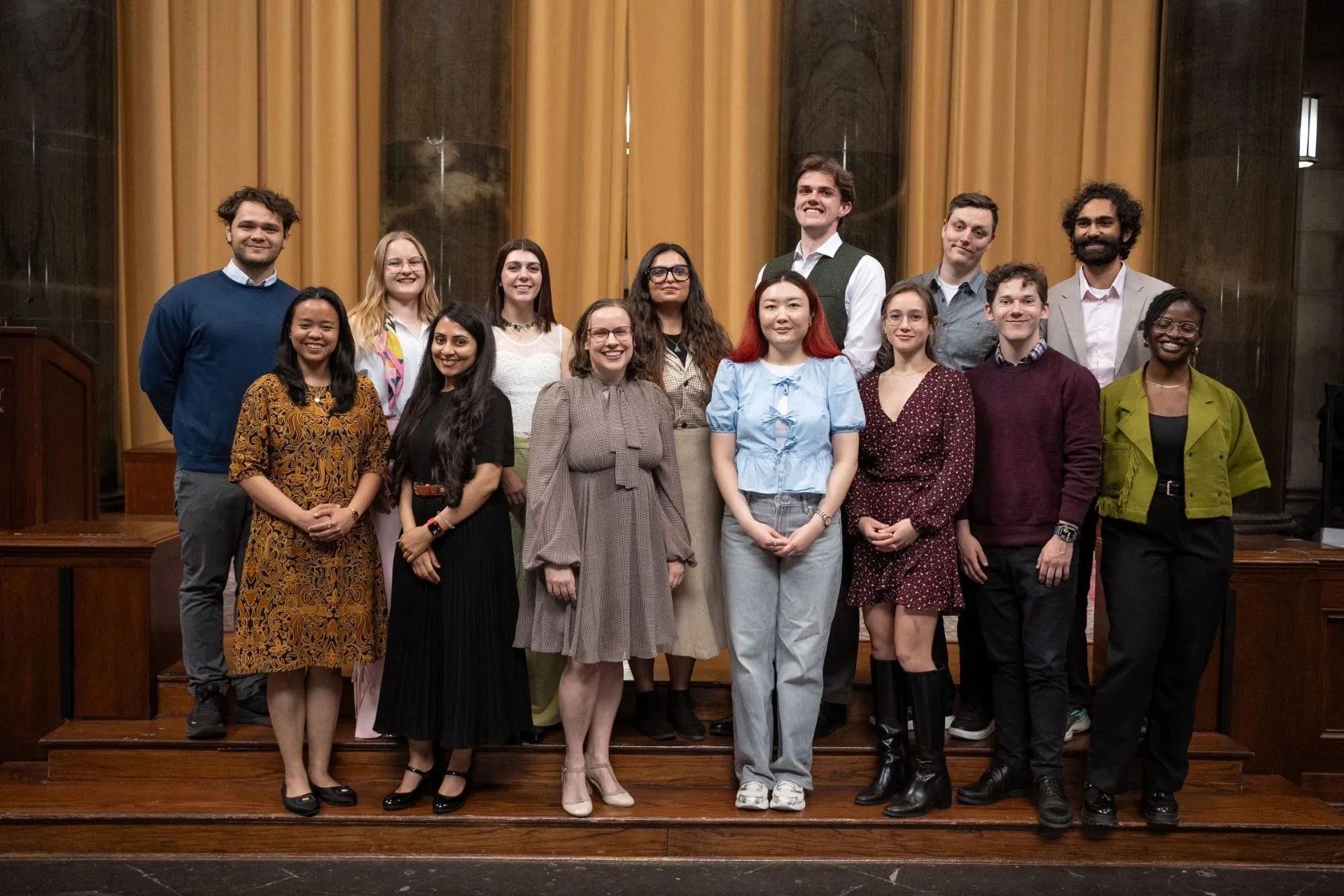
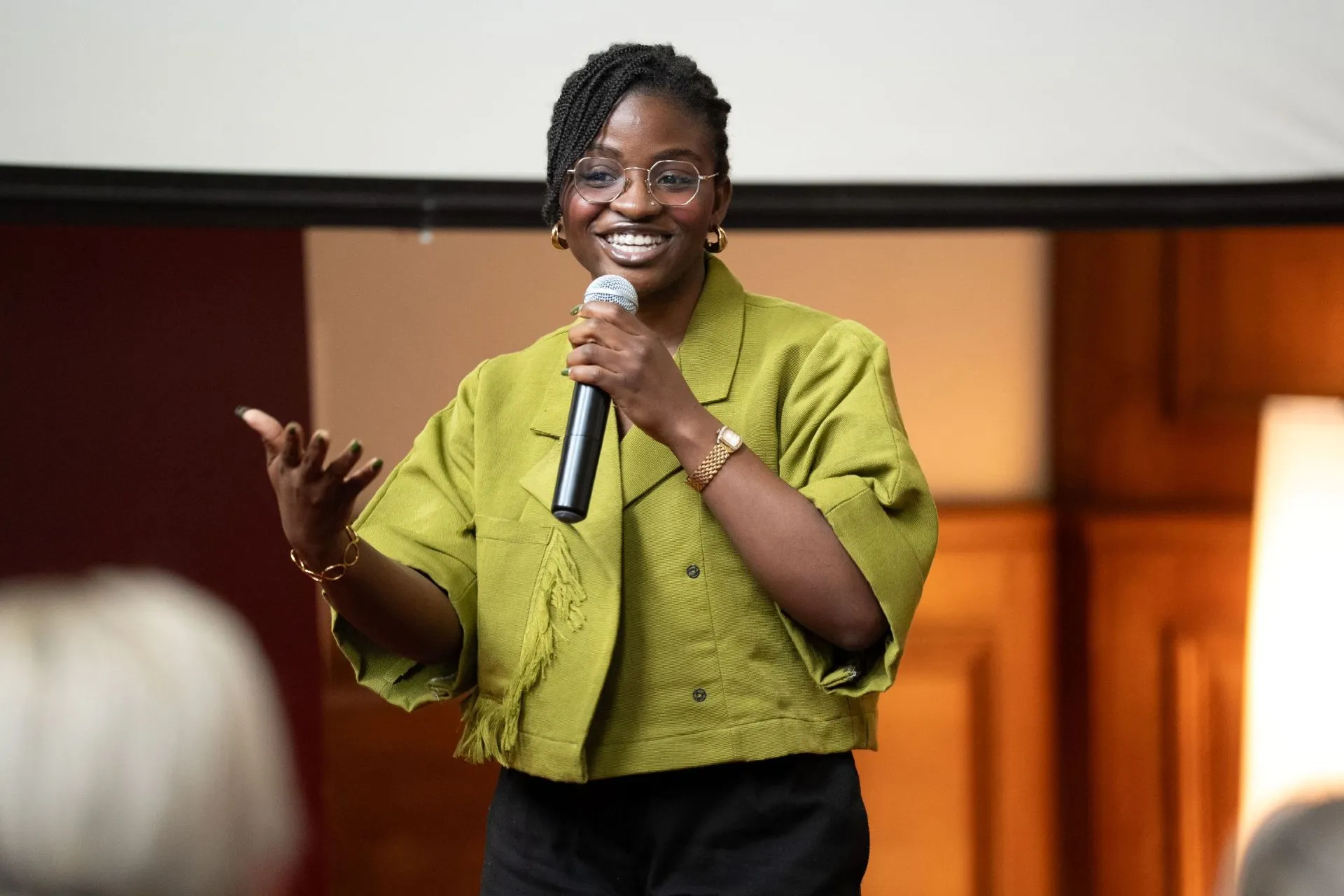
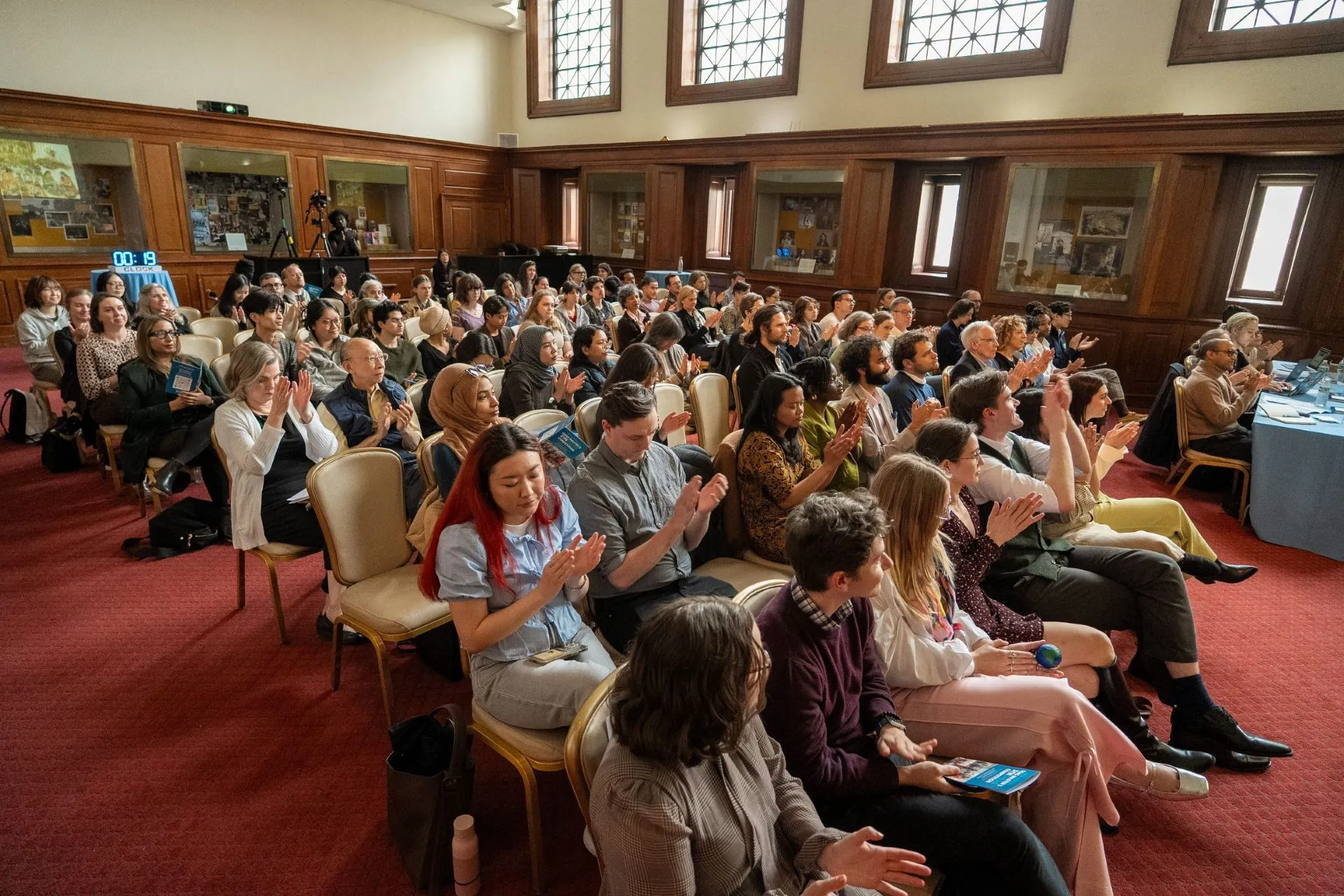
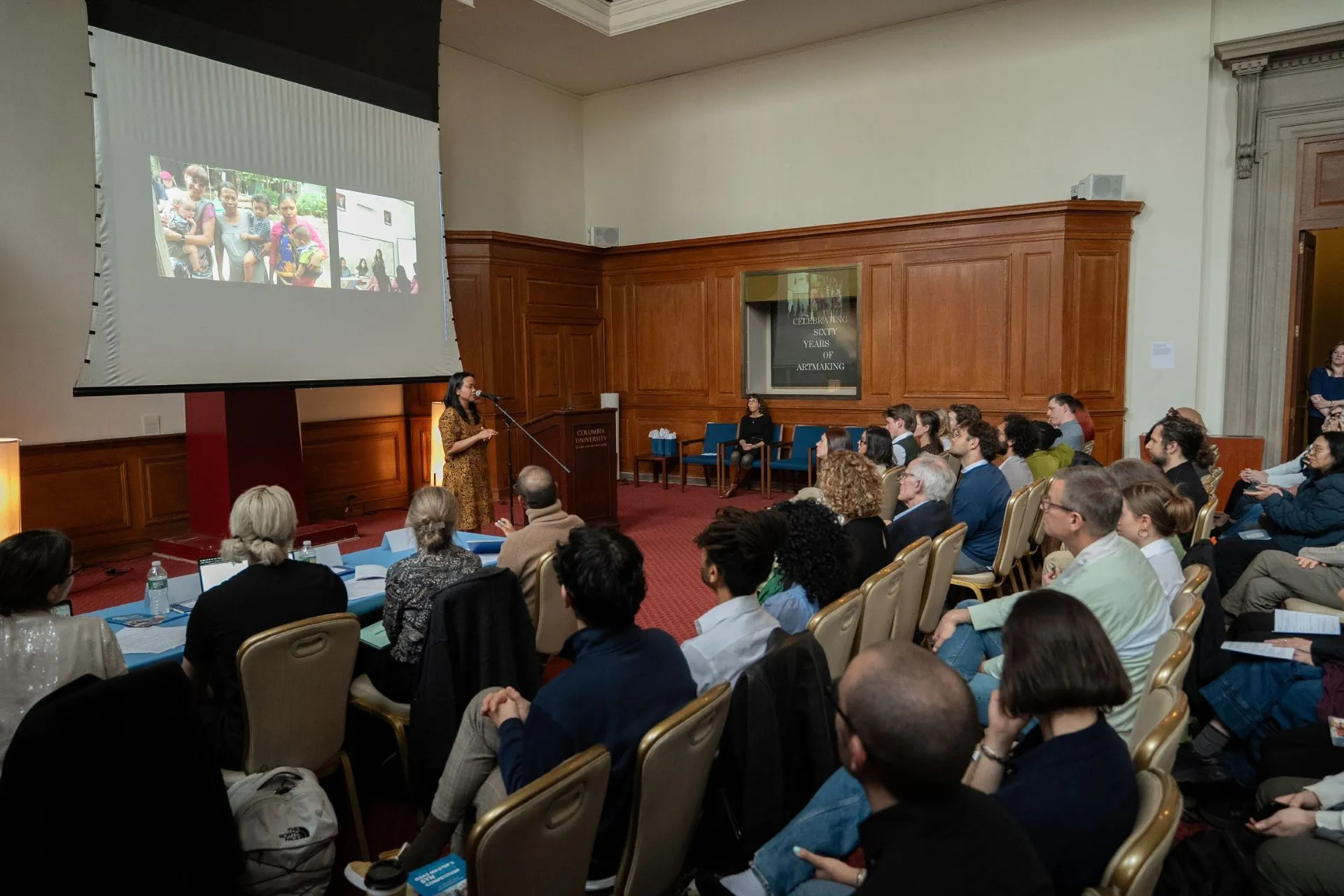
On April 29, the Faculty Room of Low Memorial Library filled with applause, nervous anticipation, and the compressed energy of fourteen graduate students attempting to explain months of research in just three minutes.
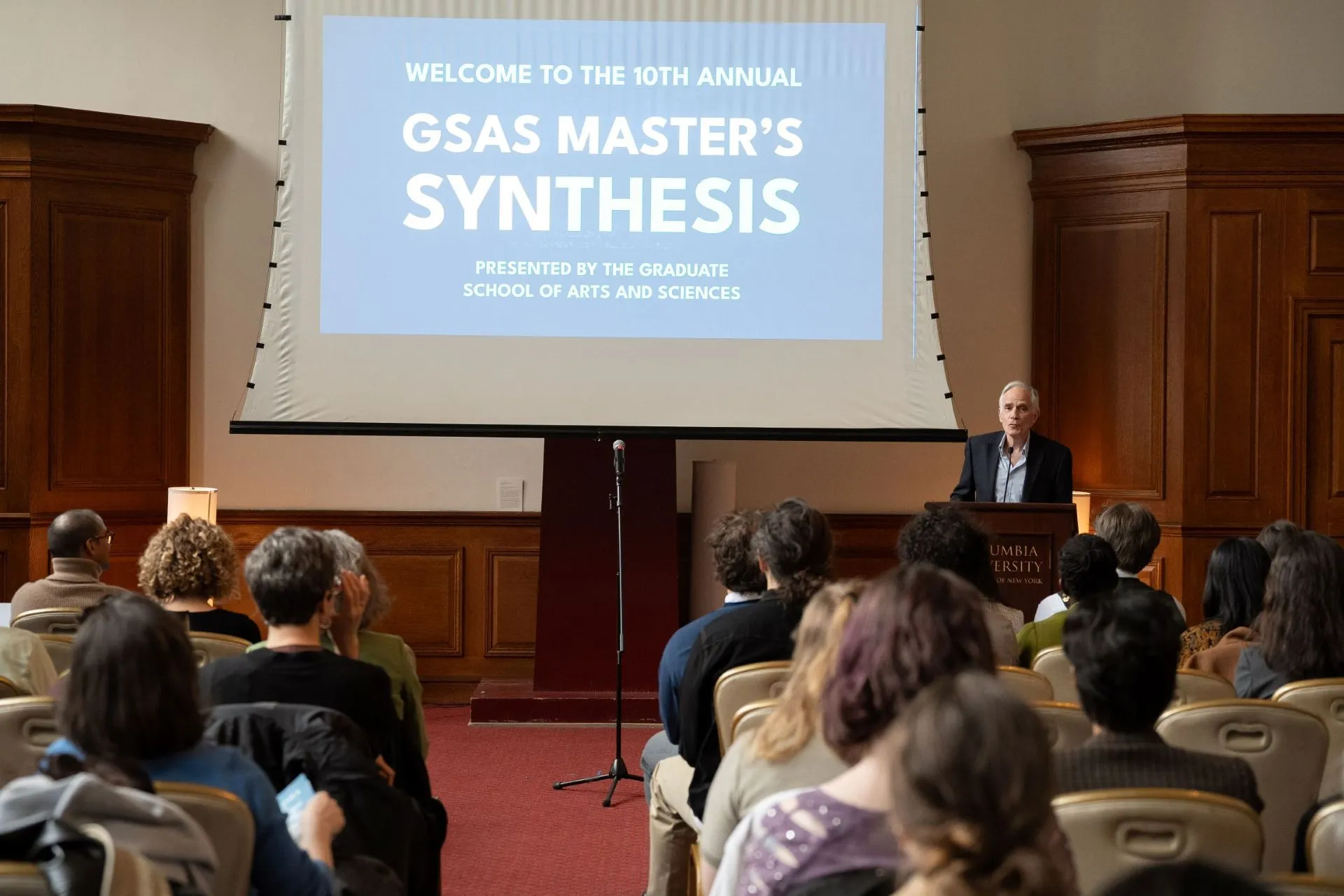
The occasion marked the tenth annual GSAS Master’s SynThesis Competition, in which students from Columbia’s Graduate School of Arts and Sciences present their thesis research using only one slide and a strict time limit. Over the past decade, the competition has become both a showcase for graduate scholarship and a celebration of public-facing academic communication.
Opening the evening, GSAS Dean Carlos J. Alonso reflected on the event’s unexpected longevity and growing community of supporters. “I do not think any of us anticipated the enthusiasm with which students have taken to participating in this event. The MA program faculty, staff, and fellow graduates have also joined in the spirit of support. I think we can say with confidence that the SynThesis tradition will carry on for another ten years, and beyond.”
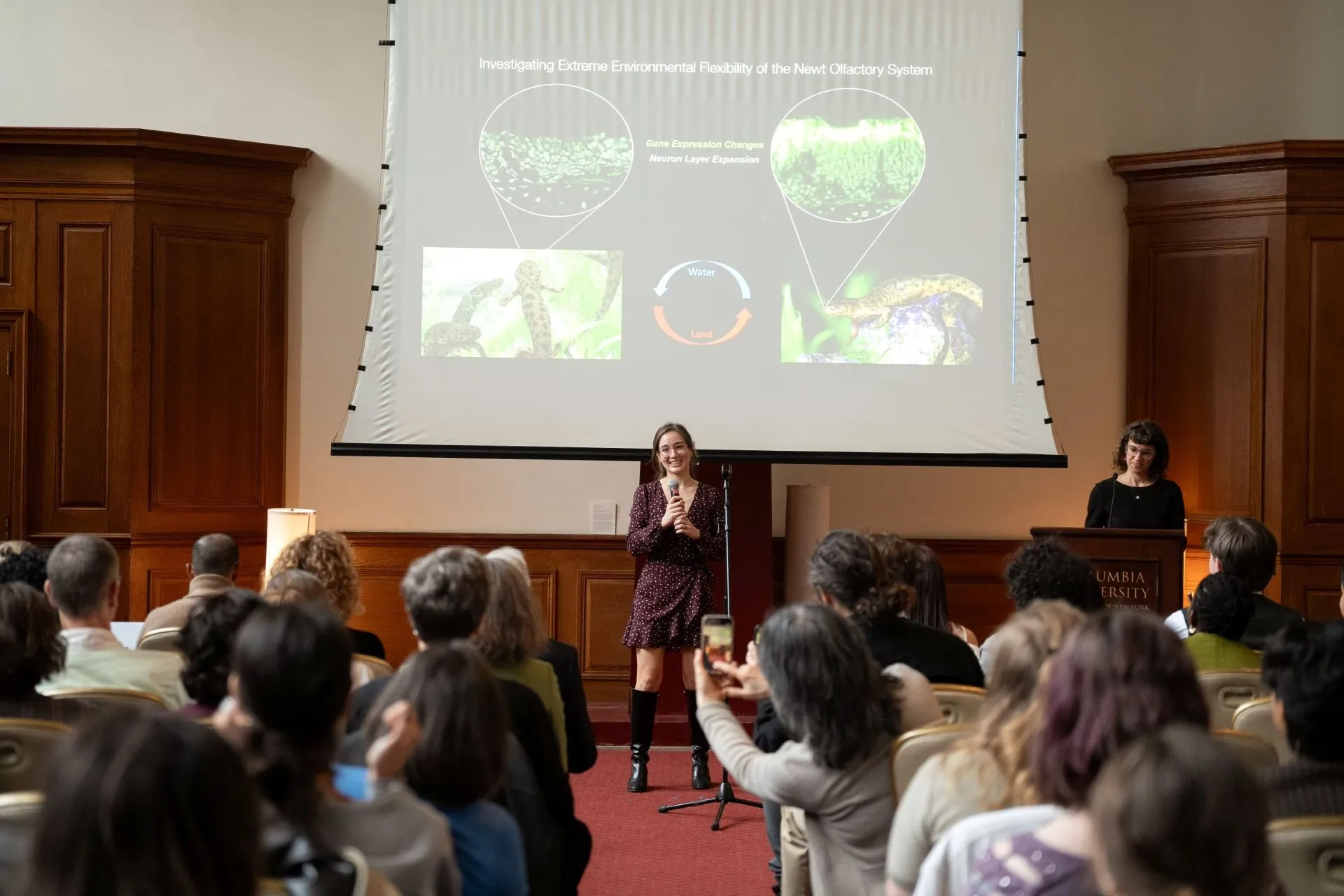
The presentations spanned an eclectic range of subjects, from the AIDS epidemic in the USSR during the 1980s to the olfactory systems of the Spanish ribbed newt. Some students leaned into humor, others into storytelling, and still others into emotional intimacy. Avantika Seth (Oral History) opened with an extended silence before explaining that her documentary thesis explored generational silence within her own family. “The aim was to shock people, and to bring them in touch with what really happens when you are present with silence.” Zachary Mayer (Ecology, Evolution, and Conservation Biology) began with a question directed at the audience: “Who here would struggle to find love on Love Is Blind?” After several audience members raised their hands, Mayer shared his research on mating success in Siamese beta fish, whose preferences, he explained, depend heavily on visual selection.
For many participants, the challenge was not simply condensing research but translating it for listeners outside their fields. Emily Huber (International and World History), whose thesis examined proto-feminist thinkers during the French Revolution, explained that leading up to the competition. “I prepared with a hairbrush, which I used as a microphone. I also sent voice messages to my friends to get their input because they study different things.” Siddhartha Jassar Minhas (History and Literature) said that “The hardest part was striking that balance between being an academic and a storyteller. It’s very important in the universalization of scholarship to be able to speak in a riveting and engaging way.”
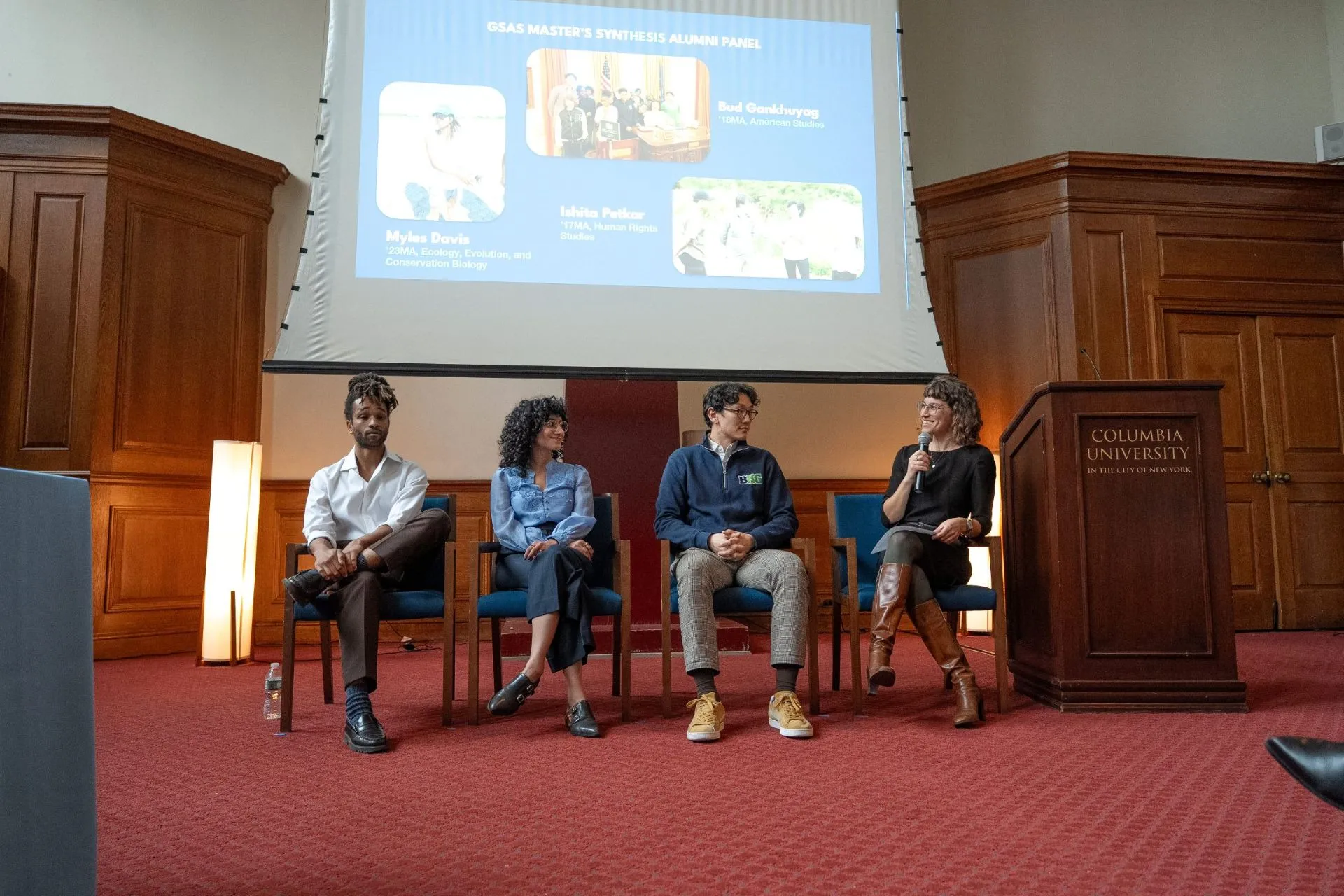
After the presentations concluded, GSAS Director of Graduate Career and Professional Development Rachel Bernard moderated a panel discussion marking ten years of SynThesis. Alumni Myles Davis (’23MA, Ecology, Evolution, and Conservation Biology), Bud Gankhuyag (’18MA, American Studies), and Ishita Petkar (’17MA, Human Rights Studies) reflected on how the competition shaped their professional lives after Columbia. Petkar, now a human rights lawyer, recalled that when she was an MA student, “My thesis was super theoretical, but it had a practical application. To be able to explain it to people who didn’t speak the human rights language was really important to me, so SynThesis was really a critical part of my journey.”
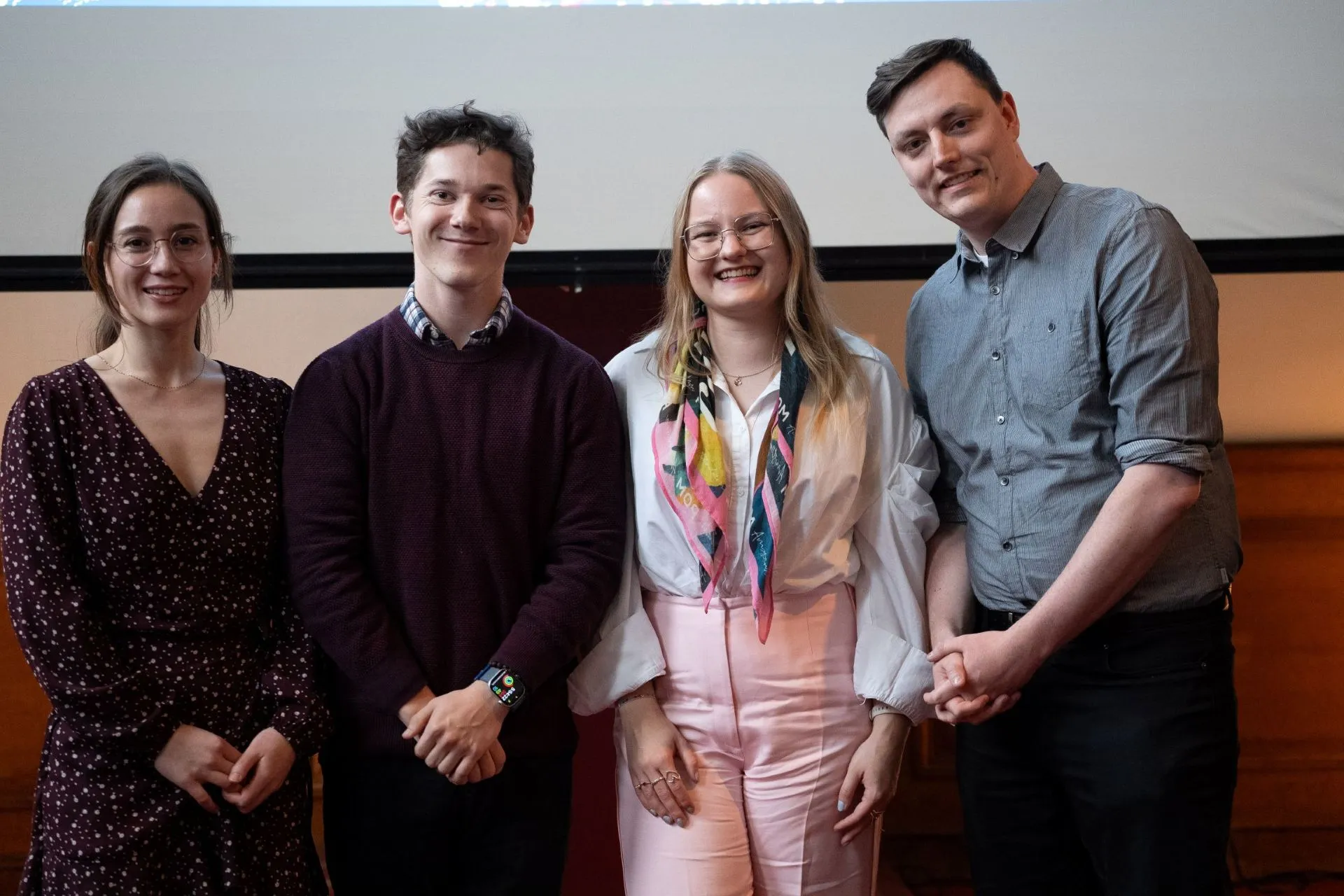
Then the panelists rejoined the audience, as Rachel Bernard announced the competition results. Audience Choice awards went to Gabriel Møller (Quantitative Methods in the Social Sciences) for Best Slide, Zachary Mayer for Best Communication, and Alyssa Siregar (Sociology) for Most Innovative Presentation. The judges awarded third place to Emily Huber and Zachary Mayer, each of whom received a $250 prize. Jamie Woych (Biotechnology) received second place and a $500 award. Jordan Dickens (Russia, Eurasia, and Eastern European Regional Studies) won first place and the competition’s $1,000 prize. “It feels incredible!” exclaimed Jordan, “I'm in shock right now. Everyone did such a great presentation, so it feels really good to be chosen by the judges.”
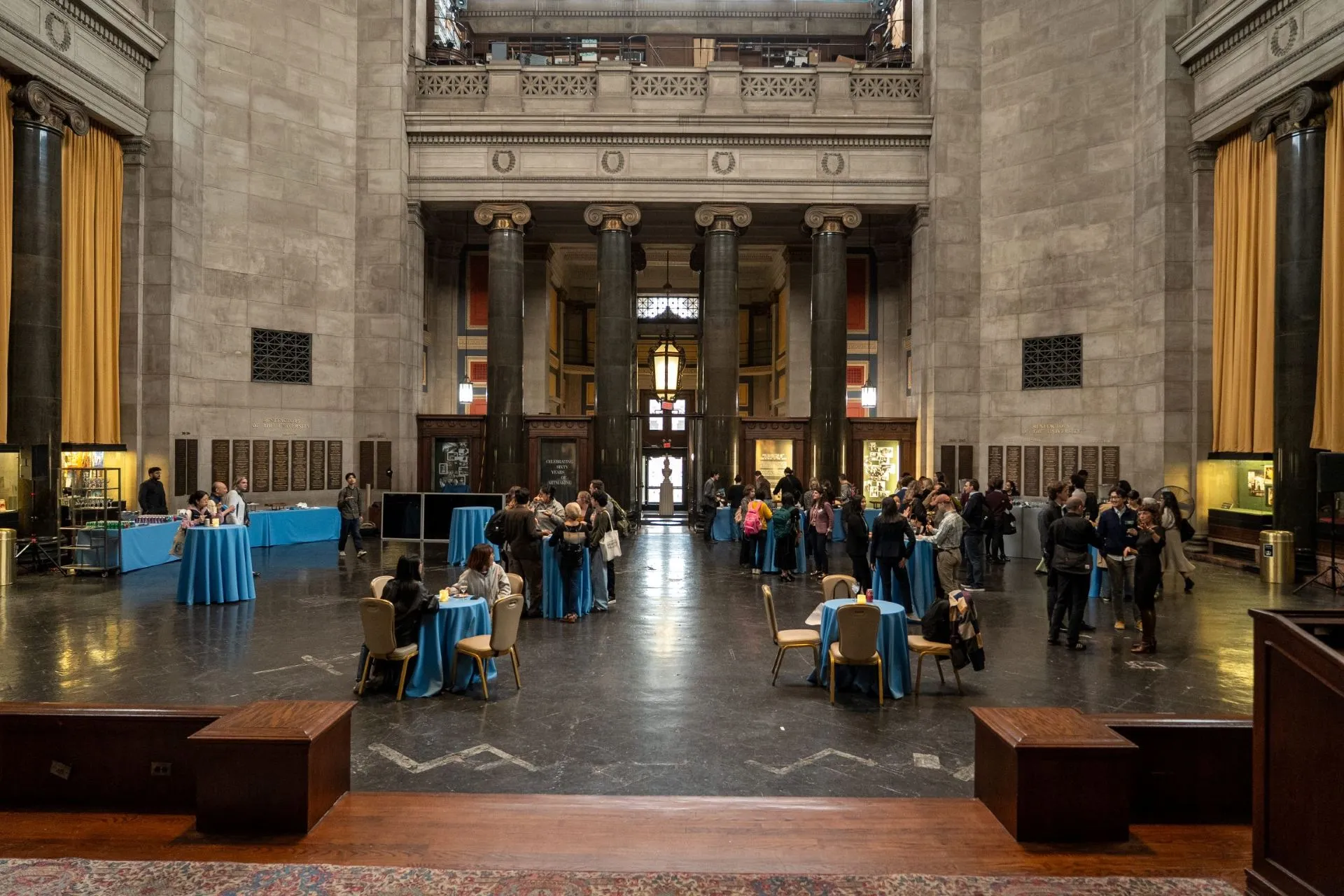
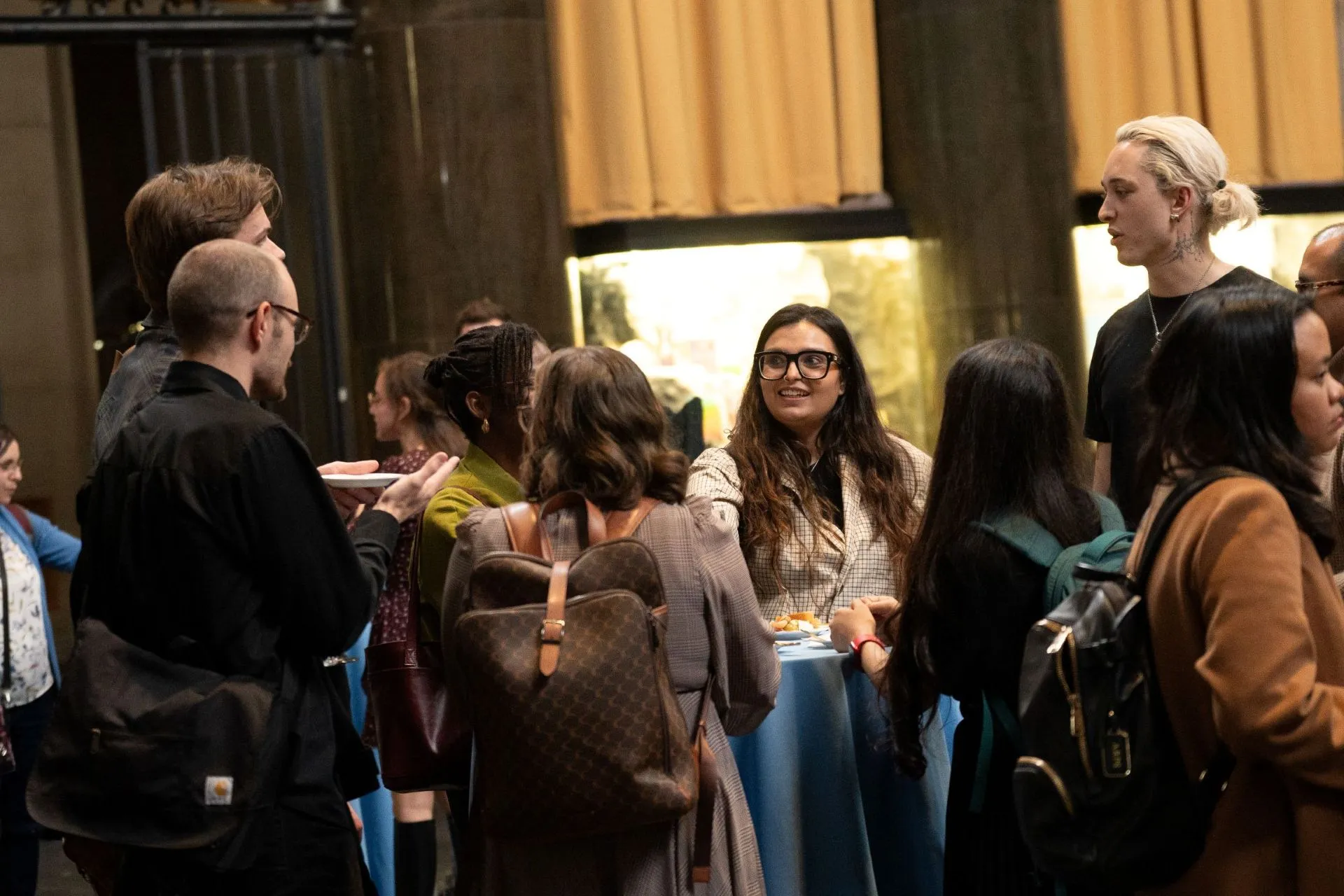
As the competitors unwound at the post-SynThesis reception in the Low Memorial Library rotunda, the mood shifted from competition to camaraderie. Participants compared presentation strategies and congratulated one another. Jamie Woych offered simple advice to future SynThesis participants: “Just have fun with it. Remember that all the competitors also have amazing work, and these are peers that you'll maybe meet in the future.”
FINALISTS
Feyisayo Aluko (Oral History)
The House I Return To
Aidana Bolat (Slavic Languages)
The Bureaucratic Chronotope: Time, Space, and Consciousness in Gogol and Saltykov-Shchedrin
Jordan Dickens (Russia, Eurasia, and Eastern European Regional Studies)
“Better Not to Think About It?”: The AIDS Epidemic, Perestroika, and the Collapse of the Soviet Union, 1983–1991
Sydney Horner (American Studies)
Top Hat, White Tie, and High Heels: Tap-Dancing Gender and Race
Emily Huber (International and World History)
Visions of Care: Human Nature, Sympathy, and Revolutionary Institutions in Mary Wollstonecraft and Sophie de Grouchy's Thought, 1789–1799
Zachary Mayer (Ecology, Evolution, and Conservation Biology)
Unlocking the Secrets of the Siamese Fighting Fish: A Study on Mating Behavior
Siddhartha Jassar Minhas (History and Literature)
“A Strange Fish”: Love and Fear of the Strange in Shakespeare's The Tempest
Gabriel Møller (Quantitative Methods in the Social Sciences)
The Seat You Chose: What 60,000 Movie Seats Reveal About Consumer Behavior in the Experience Economy
Matt Palmer (Latin American and the Caribbean Regional Studies)
The Baptism of Science: Integrating Indigenous Plant Knowledge in Mexican Medicine, 1876–1914
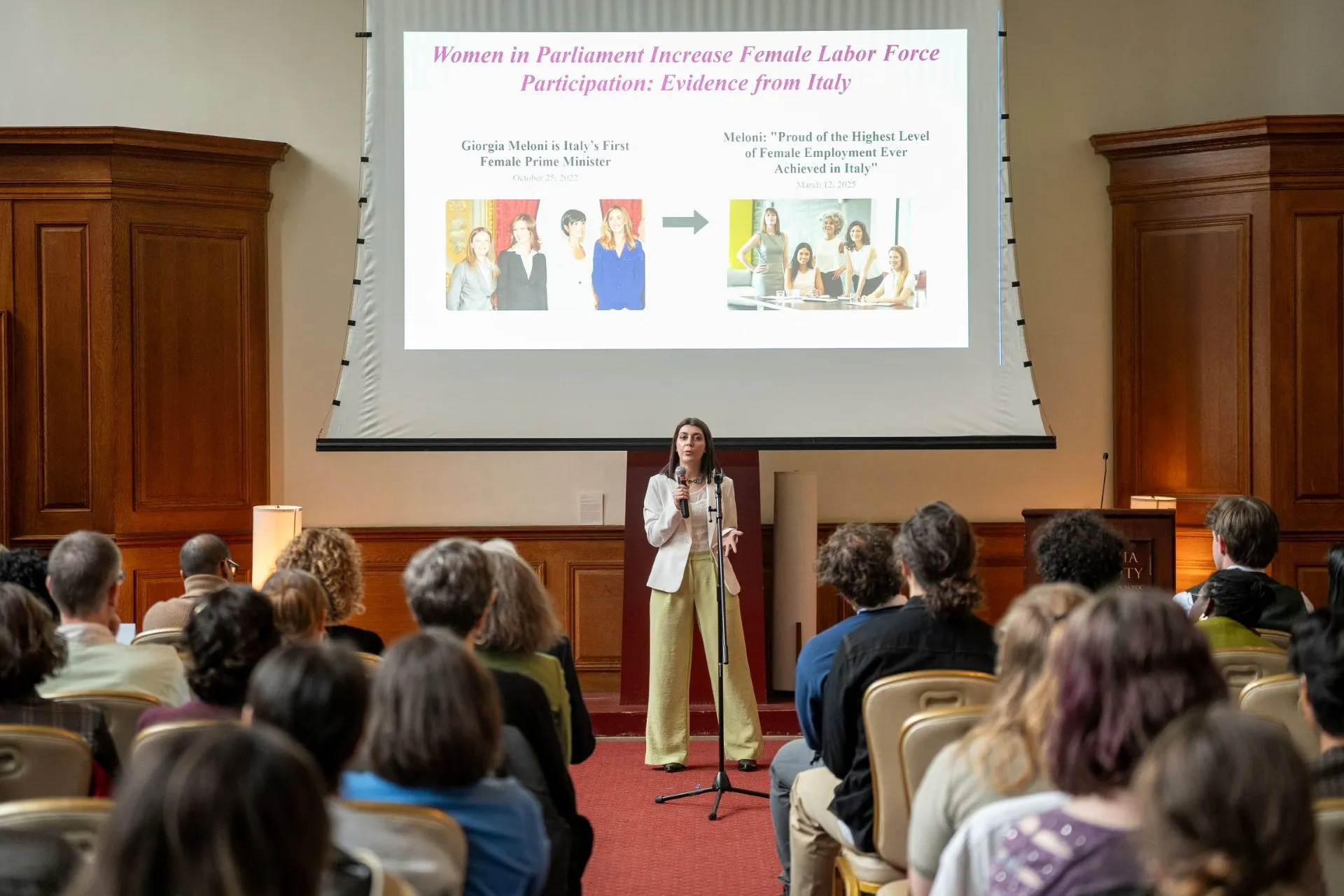
Federica Pennio (Quantitative Methods in the Social Sciences)
Do Female Politicians Matter for Female Labor Market Outcomes? Evidence from Italy
Nandini Rawal (Religion)
Crafting a Sacred World: Art, Creativity, and Unseen Labor
Avantika Seth (Oral History)
Will You Remember What I Choose to Forget?
Alyssa Siregar (Sociology)
Why They Stopped: What Former Human Traffickers in Indonesia Taught Me About Change
Jamie Woych (Biotechnology)
Environmental Plasticity of the Newt Olfactory System
JUDGES
Shafat Alam (’18MA Quantitative Methods in the Social Sciences)
Treasury Markets Principal, Federal Reserve Bank of New York
Frédérique Baumgartner
Senior Lecturer, MA Program Director, Art History
Lulu Bird (’24MA Global Thought)
Digital Strategy Lead, Google
Gergana Halpern
Deputy Director, Institute for the Study of Human Rights
Matt Sandler
MA Program Director, American Studies
ALUMNI PANELISTS
Watch the panel discussion here.
Myles Davis (’23MA, Ecology, Evolution, and Conservation Biology)
Senior Manager of Green Infrastructure, NYC Bird Alliance
Bud Gankhuyag (’18MA, American Studies)
History Teacher, The Brooklyn Green Magnet School of Eco-Activism
Ishita Petkar (’17MA, Human Rights Studies)
Associate, International Litigation & Arbitration and Global Business & Human Rights, Foley Hoag LLP