Each summer, Columbia University’s Graduate School of Arts and Sciences (GSAS) becomes an incubator of academic exploration as the Summer Research Program (SRP) brings together undergraduate scholars from across the country for an immersive research experience. In partnership with The Leadership Alliance, the program offers college students an early introduction to graduate-level research. At the core of this model is a vital group of guides—GSAS doctoral mentors—who shape, support, and sustain each participant’s growth. This year, six GSAS students from a wide range of Arts and Sciences departments took on the mentoring challenge, and found the experience as transformative for themselves as it was for their students.
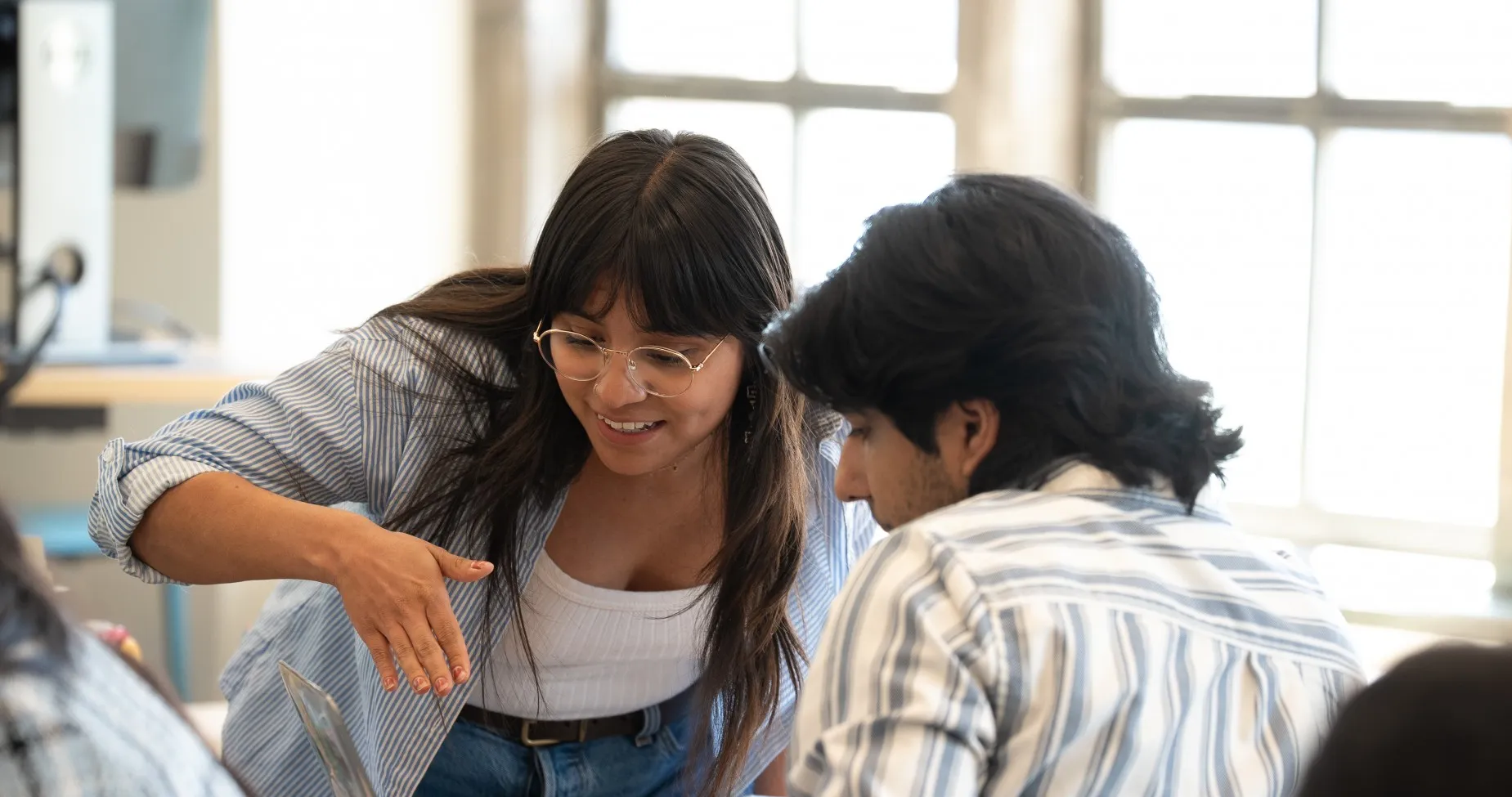
Robin Hart, a third-year sociology PhD candidate at GSAS is one of this summer’s mentors. A few years ago, Hart was an SRP participant, visiting Columbia as an undergraduate from Reed College. Now, as a mentor, Robin sees the role as a chance to give back. “The program was so helpful for me to see myself doing the work of a graduate student. So now I have the opportunity to help other students realize they can do this too and learn the skills to get there. I can show that it's possible to get from point A to point B.” In the Social Sciences cohort, Hart worked with students exploring the perception of people by race and gender—on social media, in our brains—and facilitated a curriculum designed to simulate the rhythm of graduate research. From weekly seminars to one-on-one meetings, Hart guided students through each phase of their independent projects: developing research questions, building theoretical frameworks, navigating data collection, and even learning lessons from setbacks. “There’s a lot of practical problem-solving,” Hart explained. “How to fix a spreadsheet error, how to code a dataset, what to do when a method doesn’t work. I show them my own work too, to help them see the long road of research and how it evolves over time.”
For Lauren Stockmon Brown, a fourth-year PhD student in literature with a focus on performance studies and Africana studies, mentoring in the Humanities cohort brought new dimensions to her academic identity. “Usually when I’m teaching undergrads, I feel like I have to perform a kind of ‘professor’ role,” she said. “But as an SRP mentor, I just got to be Lauren. That allowed for more openness, and the students could see more of who I am. I think that created space for more honest and dynamic learning.” Brown worked closely with four core students, all exploring the intersections of identity, liberation, memory, and performance. She designed seminar-style group sessions that followed professional academic practices: peer review, collaborative feedback, and discussions modeled after conferences. “Each class, I tried to mirror what I’ve experienced in grad school—learning how to give and receive critique in ways that are generative and thoughtful,” she said.
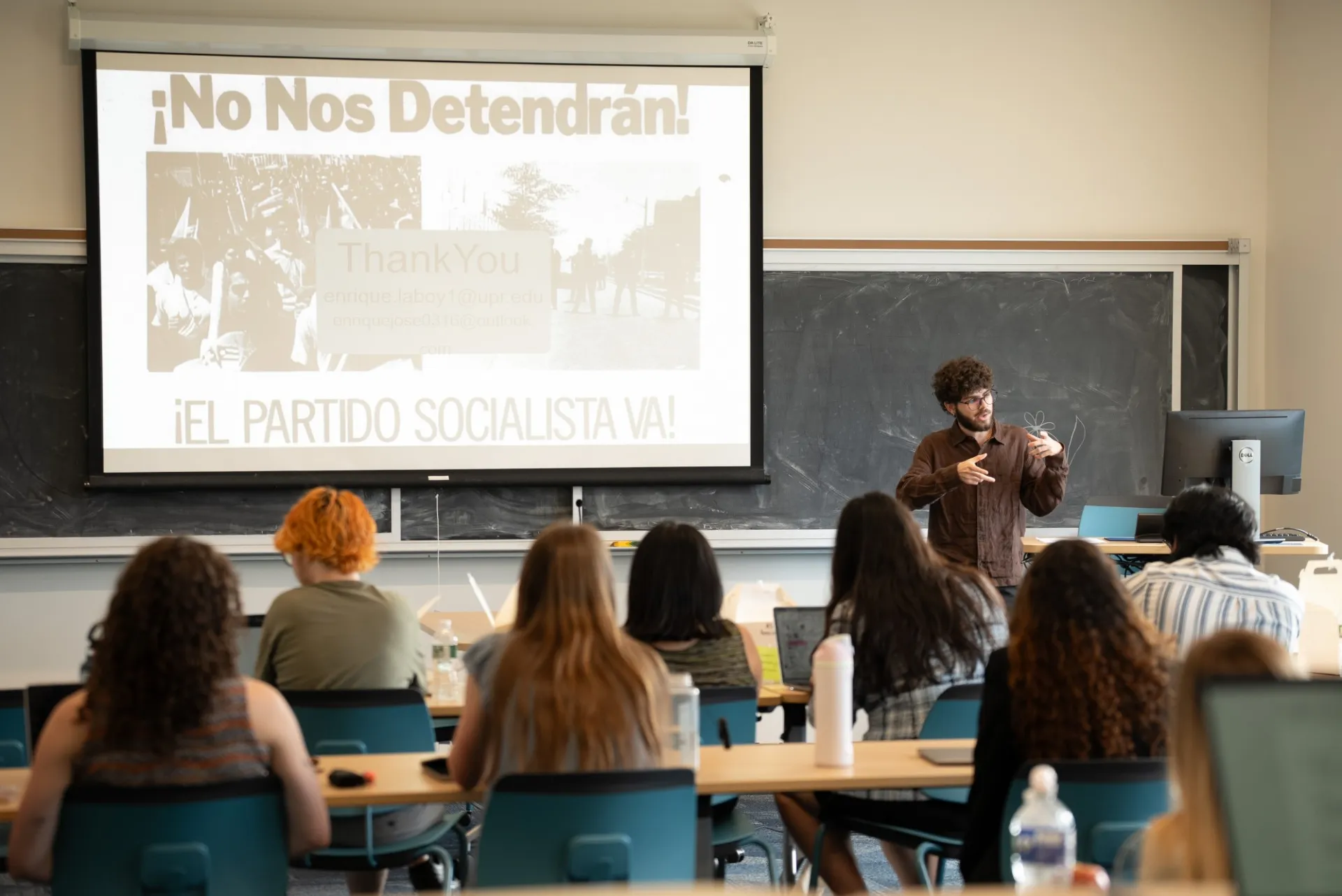
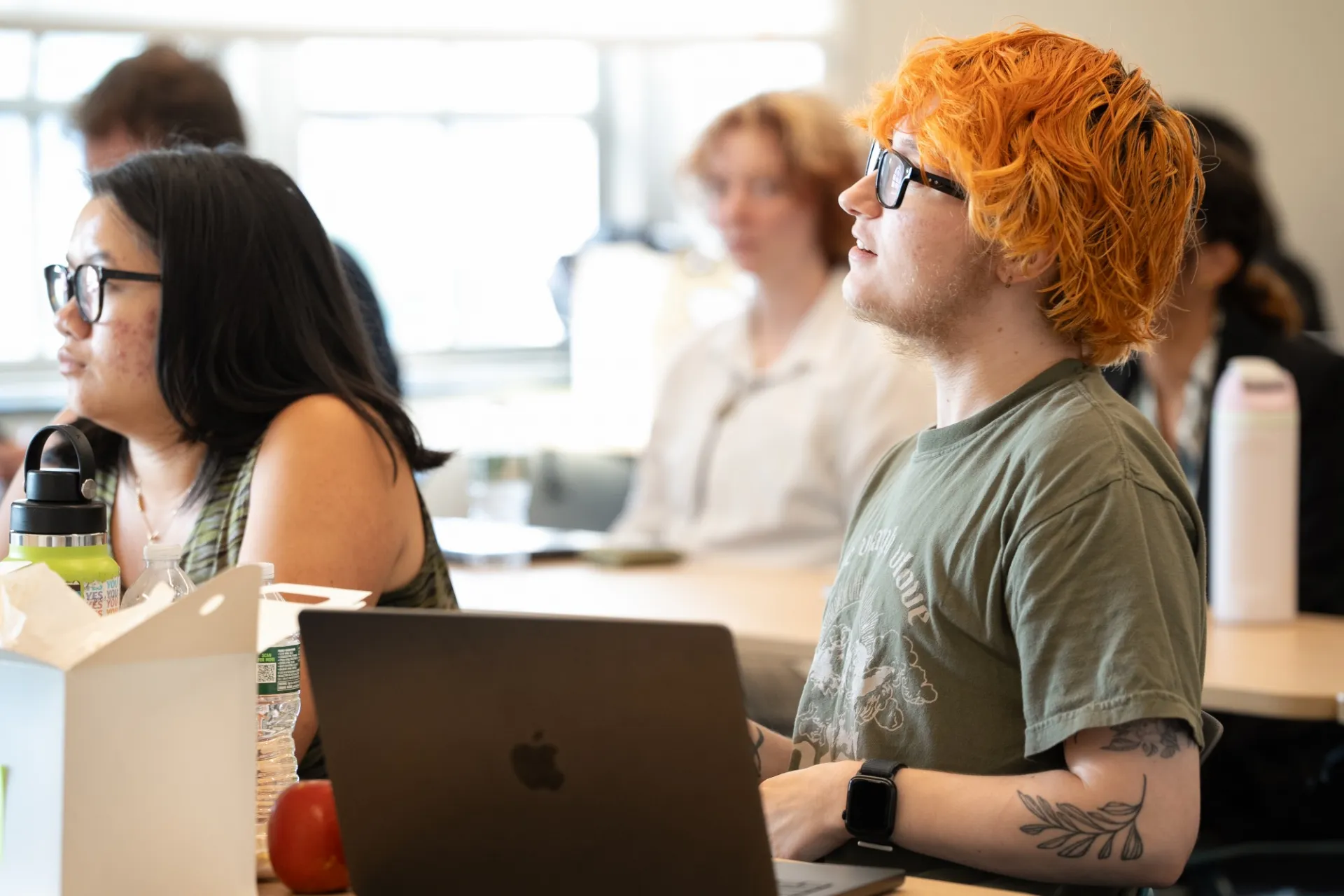
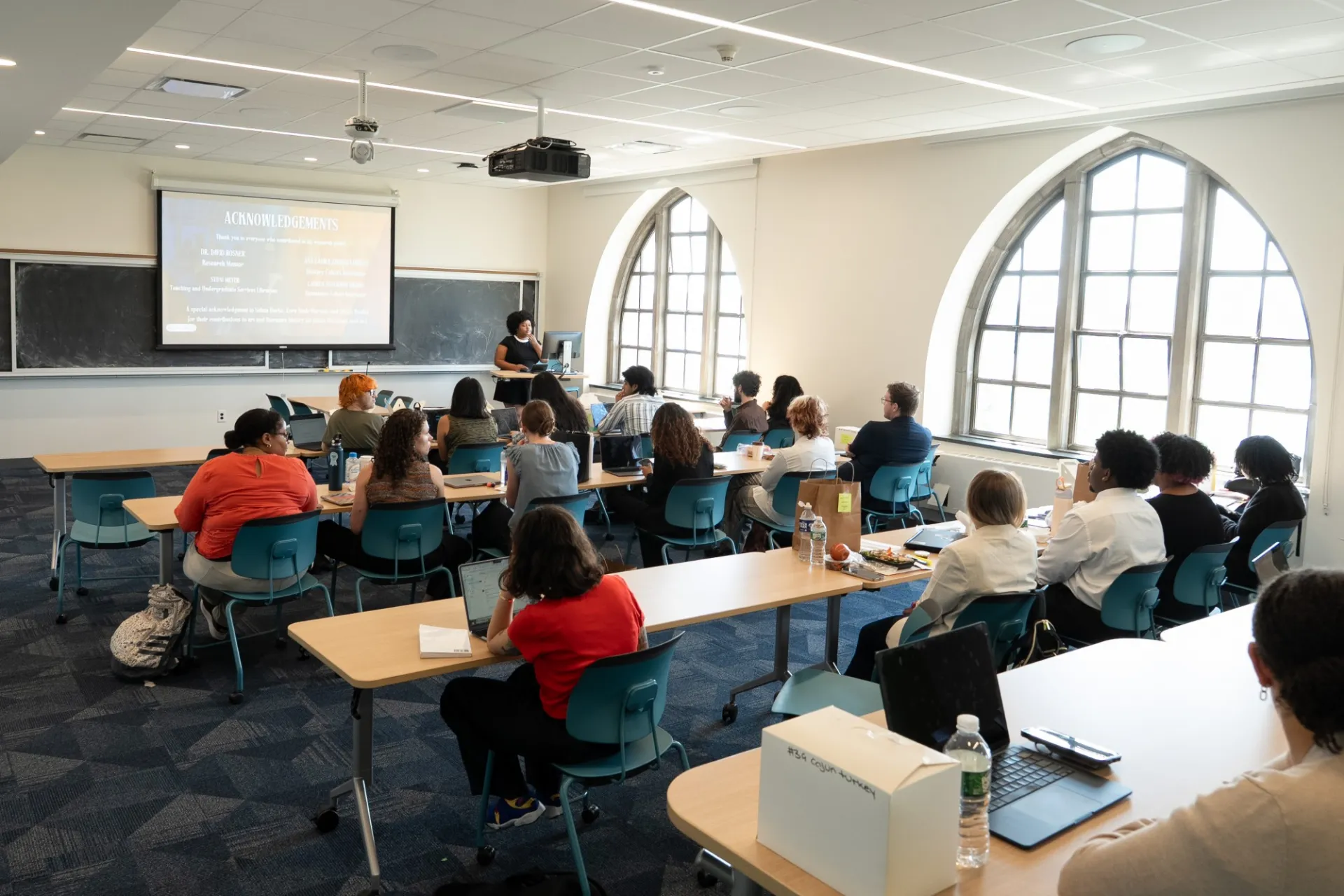
Sixteen undergraduate students from the program gathered on July 18 in a bright room in Riverside Church to present the culmination of this summer’s research as practice for the national symposium the following week. Topics ranged from tracking the eye movements of chemistry test-takers to the influence of Jewish mysticism in American theater to the bias of masculinity in the Pakistani TV news. This was an opportunity for SRP students to both practice their public speaking skills and to get final thoughts on their research presentations. As the SRP students took turns at the lectern, the mentors gave constructive feedback. SRP student La’tresa Middleton presented “Mapping the Margins: Intersectionality, Identity Politics, and Violence Against Women of Color,” which featured the work of poet Cheryl Clarke. Sinclair Spratley, a sixth-year PhD student in Art History and Archaeology, and a writing mentor, suggested that Middleton let the quotes from Clarke’s poetry play out longer to help the listener understand her point-of-view. Then both SRP students and the mentors engaged in a lively discussion about presenting poetry.
The following week, the SRP students gave their final, polished research talks at an online symposium called “30 Years of LANS: Connected by Purpose, United by Progress,” in recognition of the Leadership Alliance’s three decades of work building a nationwide community of undergraduate scholars interested in graduate-level research. Watching the final presentations, mentor Lauren Stockmon Brown was proud to see her SRP mentees evolve into confident young scholars. “It was thrilling,” she said. “They started using more advanced humanities methodologies, developing real fluency. It was like watching them assemble a puzzle, with the SRP giving them both the pieces and the framework to decide how it all fit together.”
Both mentors reflected on how the program honed their own scholarly practice. “Mentoring in SRP gives me experience I wouldn’t get just doing coursework or research,” said Robin Hart. “I'm a firm believer that you understand something best when you can adequately explain it to others.” For Brown, “One of the biggest joys was sharing the playful parts of learning—even while we dealt with difficult or heavy academic topics. It reminded me that mentorship is reciprocal.” Hart added, “It’s teaching, it’s leadership. I just feel very grateful for this opportunity.”