A Taste of Graduate Study: Columbia GSAS’s 2026 Summer Research Program
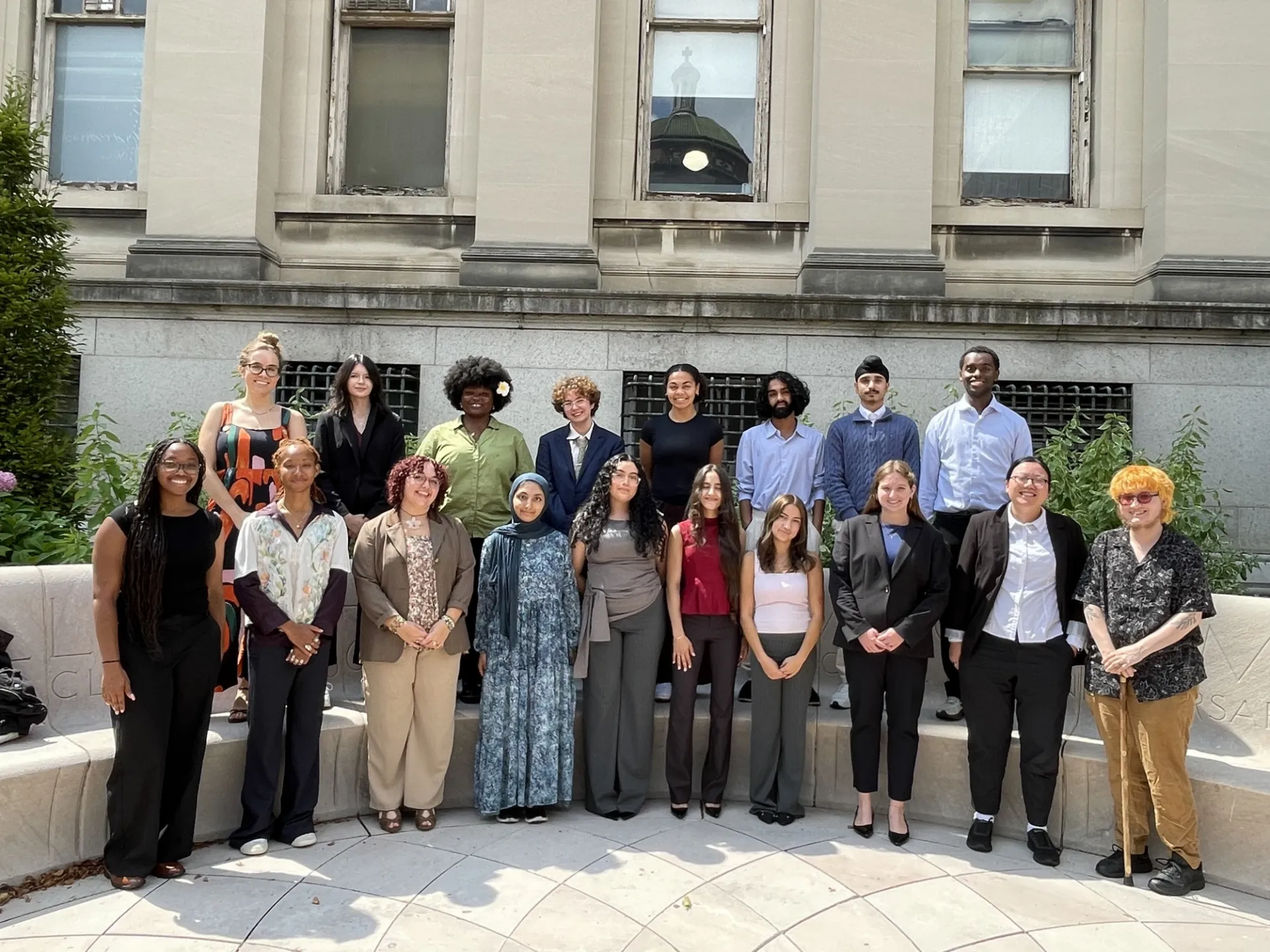
On July 16, 2026, GSAS doctoral candidates and undergraduates from colleges around the country gathered at Serafina, a neighborhood restaurant, for dinner and conversation with Graduate School of Arts and Sciences Dean Carlos J. Alonso. Over salads and entrees, they discussed the future of graduate study, what admissions committees seek in graduate applicants, and the distinctive resources GSAS offers graduate students at Columbia.
The undergraduates were participants in the GSAS Summer Research Program (SRP), a six-week program that brings promising students to Columbia to conduct graduate-level research with the support of faculty and PhD student mentors. Fourteen college students were selected for this year’s SRP cohort. Their projects ranged from studies of bladder cancer treatments to historical analyses of ancient Sanskrit poetry. Through the program, they not only conducted research but also workshopped ideas with peers, received guidance from mentors, and presented their work at a formal event in Low Memorial Library. SRP students also participated in professional development activities, including tutorials on academic writing and guidance on graduate school applications.
The dinner at Serafina offered students a chance to step away from their computers and labs while also speaking candidly with a graduate school dean. One SRP student asked Dean Alonso what drew him to academia. “I wanted to write,” said Alonso. “I wanted to think. I wanted to be surrounded by books and by great ideas and smart people. And there's only one place where you can have all of that, you know?” Another student asked about finding the right mentor. Alonso replied, “It’s as intangible as finding ‘the one.’”
Roble Gure, a political science and data analytics student at Ohio State, explained what drew him to SRP. “Columbia has such great faculty in political science, so many great theorists, people in comparative politics, and my mentor aligned specifically with my project. It was just the perfect fit.” Gure said he plans to continue his research as part of his senior thesis at Ohio State and to stay in touch with his cohort mates. “I really feel like I’ve made some lifelong friends through this program.” Amal Bilal, a computer science major at Stony Brook University, also valued the SRP community. “I’ve enjoyed discussing my research with my peers and sharing feedback, and just hearing about their research as well. It's been a great opportunity to hear about other disciplines.”
For Halia Benn, an Africana studies major at Howard University, this was a second summer in the program. Benn continued a project begun last summer: a multidisciplinary study of the poetry of Amiri Baraka, whose journals are housed in Columbia’s archives. “It’s been transformative to get insight into his experimentation, mental processing, and the things that were so personal to him.” said Benn. Benn also collaborated with Willie Mae Rock Camp, a music education nonprofit in Brooklyn whose programming is influenced by Baraka’s work. In their final presentation, Benn shared some of the music they made with teaching artists at Willie Mae, including a song that sampled Baraka’s own sonic experimentations.
Reese Nagy, a biochemistry and molecular biology major at Belmont University, said her lab experience at Columbia gave her a new level of independence. “I’ve learned a lot about the research process itself and what that really looks like–how to make decisions about what techniques to use and how to form other questions from things that we're learning.”
In his final remarks at the Serafina dinner, Dean Alonso reflected on what makes SRP distinctive. “This is the opportunity to taste, for a summer, what spending time doing research is all about,” he said. “Is that something you want to do for the rest of your life? This program can help you answer that question.”